Physical Address
304 North Cardinal St.
Dorchester Center, MA 02124
Physical Address
304 North Cardinal St.
Dorchester Center, MA 02124

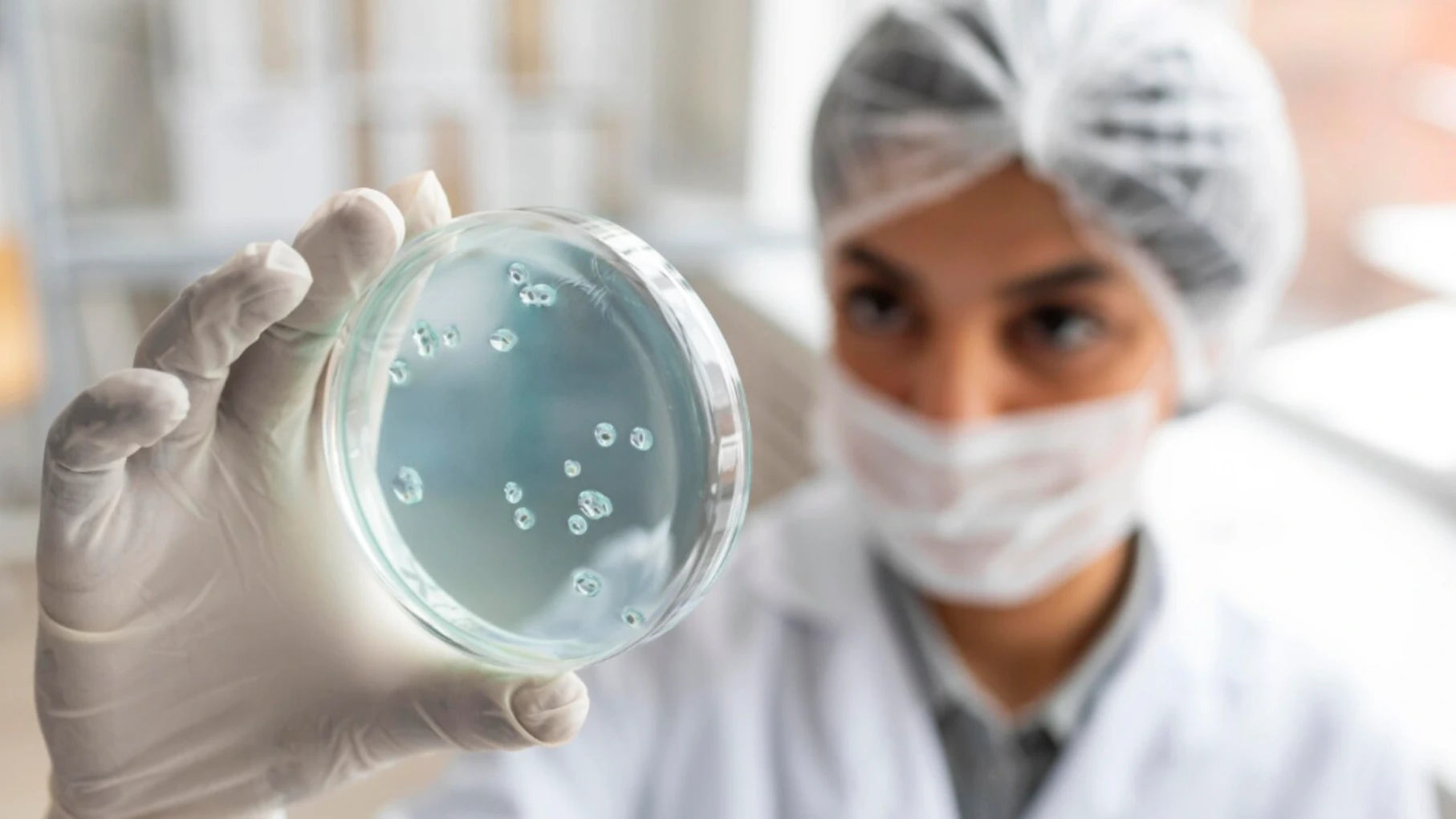
Bioavailability is the percentage of a nutrient or compound that your body absorbs and actually uses after digestion.
Quick Summary

Bioavailability explains why eating healthy or taking supplements does not always lead to better health. It depends on digestion, nutrient form, gut health, food combinations, and absorption science. Understanding bioavailability helps you make smarter nutrition decisions, especially in Indian diets where vegetarian foods, tea consumption, and digestive issues can reduce nutrient uptake.
Featured Snippet:

Bioavailability is the measure of how much of a nutrient or medicine your body absorbs and uses. It depends on digestion, nutrient form, gut health, and absorption science. Improving bioavailability through better food pairing, nutrient delivery, and liposomal technology helps the body get real benefits from what you consume.
Bioavailability answers a simple but critical question:
How much of what you consume actually reaches your cells?
For example:
The remaining amount is destroyed during digestion or excreted unused.
This explains why:
Bioavailability is influenced by:
What you swallow is not the same as what your body uses.
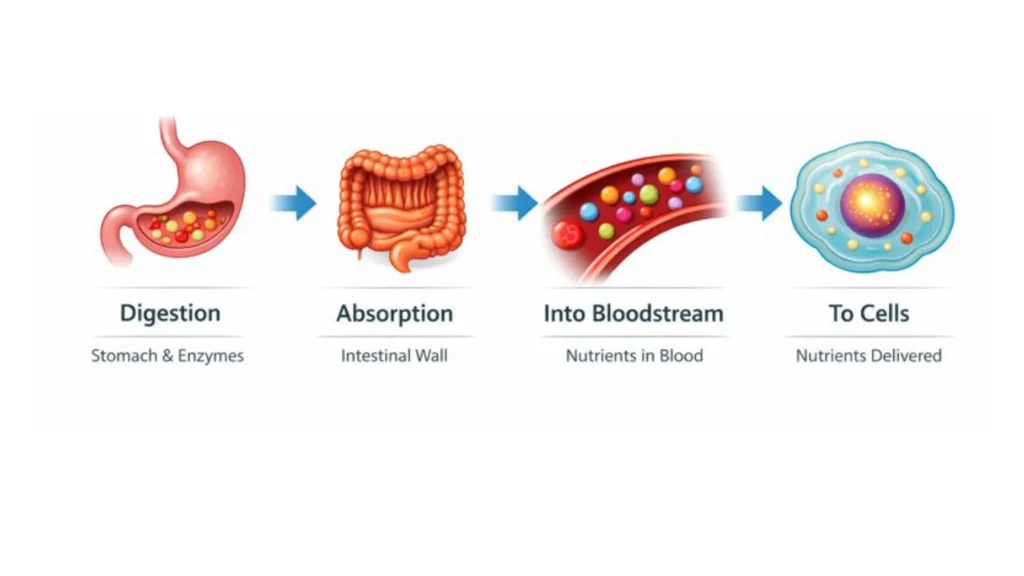
Absorption science studies how nutrients and medicines move from the digestive system into the bloodstream and then into cells.
The basic process:
This process is inefficient for many nutrients. Stomach acid, enzymes, food interactions, and poor gut health can reduce absorption significantly.
Modern absorption science has led to innovations like liposomal nutrient delivery, which helps nutrients bypass common digestive breakdowns.
In Indian lifestyles, factors such as:
often reduce absorption efficiency further. Absorption science exists to solve one problem:
How can the body absorb more of what it consumes?
Bioavailability is not fixed. The same nutrient can behave very differently depending on how, when, and with what it is consumed.
Below are the most important factors that influence how much your body actually absorbs.
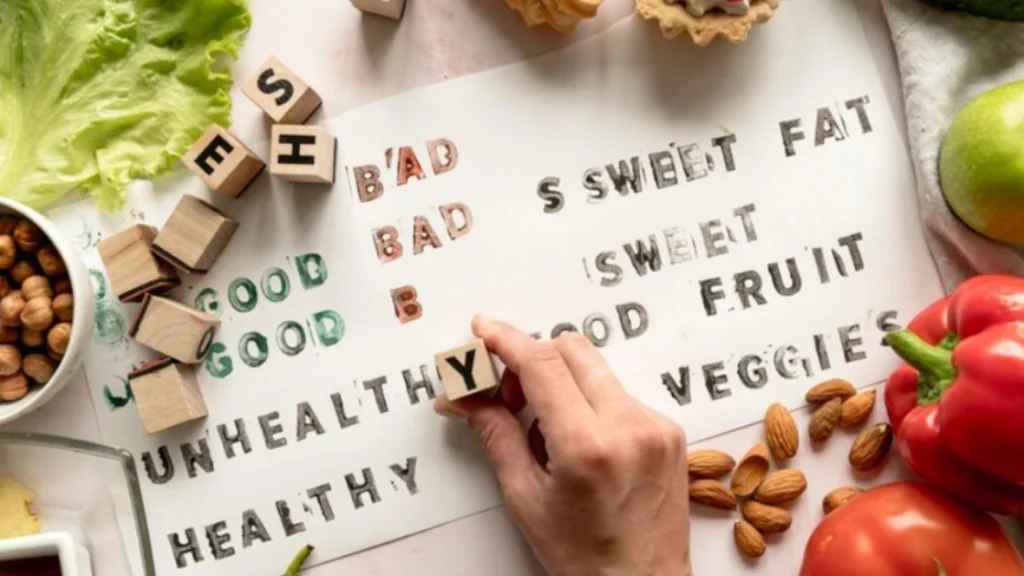
Not all nutrient forms are equal.
Examples:
This is why two supplements with the same label dose can give very different results.
Your body responds to form, not just quantity.
Some foods improve absorption, while others block it.
Enhancers
Blockers
In Indian diets, this is extremely relevant because:
Even a nutritious meal can have low bioavailability if food combinations are not considered.
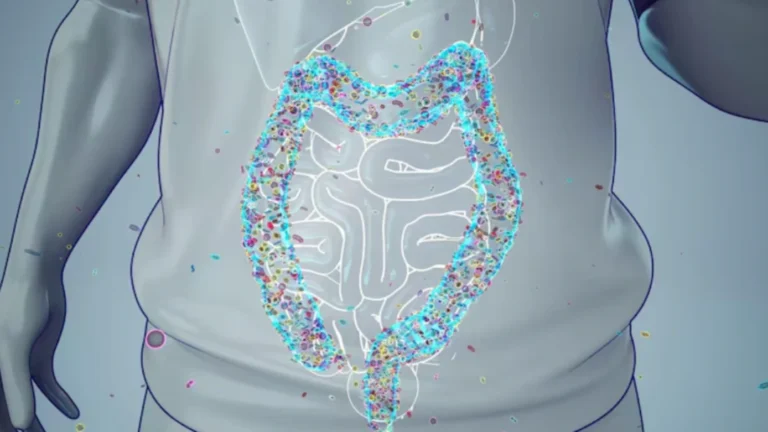
Your gut is the gateway for nutrient uptake.
If digestion is weak, bioavailability drops.
Common gut issues that reduce absorption:
In India, these are widespread due to:
A healthy gut improves bioavailability naturally, even without supplements.
As we age:
Stress also plays a major role:
This is why:
Bioavailability is not just about food. It is about physiology.
India has one of the most nutrient-dense cuisines in the world. Yet deficiencies are extremely common. The reason is not a lack of food. It has low absorption.
This makes bioavailability a critical concept for Indian health, not a luxury topic.
Before jumping to supplements, many absorption issues can be improved through simple habits.
Food pairing
Cooking methods
Timing
Gut support
These changes alone can significantly improve nutrient uptake.
Even with good habits, some nutrients are naturally poorly absorbed. This is where absorption science steps in.
Liposomes are tiny spherical structures made of phospholipids, the same material that forms your cell membranes.
Think of them as:
When nutrients are enclosed inside liposomes:
This dramatically improves bioavailability.
Liposomes are especially helpful for:
These nutrients either degrade easily or absorb poorly in regular form.
For Indians with:
liposomal delivery can bridge the absorption gap.
In most cases, yes, but with an important caveat. Higher bioavailability means your body absorbs and uses more of a nutrient. That’s usually a good thing, especially when:
However, higher bioavailability also means dosage matters more.
For example:
So the goal is not maximum absorption at any cost. The goal is optimal bioavailability with safe dosing.
This is why modern nutrition focuses on:
The concept of bioavailability comes from pharmaceutical science, not wellness marketing.
Bioavailability determines:
This is why drug formulations are heavily tested.
The same principle applies, but with nutrients:
This is why modern supplement science borrows from pharma:
India’s nutraceutical industry is now moving in this direction, especially for vitamins like D3, C, curcumin, and glutathione.
Bioavailability is not guessed. It is measured using:
For everyday people, you won’t see a “bioavailability number” on a report.
But you feel it when:
That’s real-world bioavailability at work.
The next phase of health is not about taking more supplements. It’s about taking smarter ones.
In India, this future is already emerging through:
The question is shifting from:
“How much should I take?”
to:
“How much will my body actually use?”
That mindset change alone can transform long-term health outcomes.
In simple terms:
It’s not what you eat or take. It’s what your body absorbs.
Bioavailability is the portion of a nutrient or medicine that your body absorbs and uses. Higher bioavailability means better effectiveness.
Vegetarian diets, tea consumption, gut issues, and indoor lifestyles reduce absorption. Bioavailability helps overcome these challenges.
Yes. Liposomes protect nutrients during digestion and deliver them directly into cells, significantly improving absorption.
Yes. Pairing iron with Vitamin C, adding healthy fats, fermenting foods, and avoiding tea with meals all help.
Mostly yes, but dosage matters. Highly absorbable nutrients should be taken within safe limits.
This content is for general awareness and educational purposes only. It is not a substitute for professional medical advice, diagnosis, or treatment. Always consult your doctor, nutritionist, or qualified healthcare professional before starting any new supplement or making changes to your diet or lifestyle.
[1] National Institutes of Health – Nutrient Bioavailability
[2] World Health Organization – Micronutrient Absorption & Deficiency
[3] National Center for Biotechnology Information – Factors Affecting Bioavailability
[4] NCBI – Liposomal Drug and Nutrient Delivery Systems
[5] Indian Council of Medical Research – Dietary Guidelines & Nutrient Gaps